

The other items that account for the change in owner’s equity are the owner’s investments into the sole proprietorship and the owner’s draws (or withdrawals). A recap of these changes is the statement of changes in owner’s equity. Here is a statement of changes in owner’s equity for the year 2024 assuming that the Accounting Software Co. had only the eight transactions that we covered earlier. The totals for the first eight transactions indicate that the company had assets of $17,200.
Accounting Crash Courses

Liabilities are best described as debts that don’t directly generate revenue, though they share a close relationship. The money borrowed and the interest payable on the loan are liabilities. If the business spends that money to acquire equipment, for example, the purchases are assets, even though you used the loan to purchase the assets. Assets have a market value that can increase and decrease but that value does not impact the loan amount. Understanding liabilities and expenses, their differences, and their impact on financial statements is fundamental to effective business accounting. Proper classification not only provides clarity but also supports accurate financial reporting and compliance.
- These obligations are recorded as liabilities to ensure accurate reporting of a company’s financial position.
- Here, we provide clear definitions of expenses and liabilities in accounting, along with practical examples and guidance on how to classify and record each.
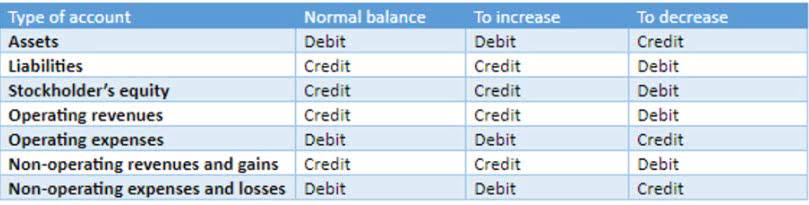
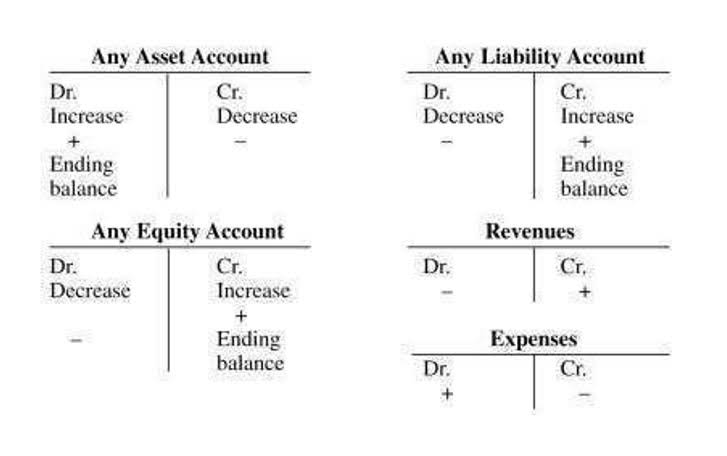
- In this Accounting Basics tutorial I discuss the five account types in the Chart of Accounts.
- Accounts recorded in these financial statements fall in either of the four categories i.e., revenue or expense and assets or liabilities.
Example 3 – Contingent Liabilities
The remaining parts of this Explanation will illustrate similar transactions and their effect on the accounting equation when the company is a corporation instead of a sole proprietorship. The totals tell us that as of midnight on December 6, the company had assets of $17,200. It also indicates the creditors provided $7,000 and the owner of the company provided $10,200. The totals also reveal that the company had assets of $17,200 and the creditors had a claim of $7,000. The totals now indicate that Accounting Software Co. has assets of $16,300. The creditors provided $7,000 and the owner of the company provided $9,300.
What is a Chart of Accounts? A How-To with Examples
- Accurately accounting for pension obligations can be complex and may require actuarial valuations to determine the present value of future obligations.
- Is the transaction a cost you incurred to generate future revenue?
- On an accrual basis, on the other hand, expenses are recorded when they are incurred.
- For example, companies may take out loans to invest in profitable ventures, such as expanding into new markets or launching new products.
- Service Revenues include work completed whether or not it was billed.
Liabilities represent the obligation to pay, while expenses represent the actual consumption of resources. An incurred expense is immediately recognized, whereas the liability remains on the balance sheet until the cash outflow occurs to settle the obligation. For instance, the expense for a month’s rent is recognized when the space is used, but the liability exists only until the payment is physically remitted. Common examples include the Cost of Goods Sold (COGS), rent payments, utility bills, and depreciation of fixed assets.
Determine if it’s an obligation or cost
Common expenses incurred include rent expenses, payments to suppliers, salaries and wages, factory leases, and depreciation. Businesses are allowed to write off tax-deductible expenses on their income tax returns in order to lower their taxable income as well as their tax liability. However, the internal revenue service (IRS) has strict rules on the expenses businesses have permission to claim as a deduction. The totals after the first eight transactions indicate that the corporation had assets of $17,200. The creditors provided $7,120 and the company’s stockholders provided $10,080. The accounting equation also Accounting Security indicates that the company’s creditors had a claim of $7,120 and the stockholders had a residual claim of $10,080.
Debt-to-Income Ratio

Liabilities play a crucial role in evaluating a company’s financial health. By analyzing the types, amounts, and trends of a company’s liabilities, it is possible to gauge its financial position, stability, and risk exposure. A company with too many liabilities compared to its assets may face cash flow problems or increased financial risk. Understanding a company’s liabilities can also help assess its ability to meet debt obligations and the potential for future growth.
How to track business expenses: Step-by-step guide
You can calculate your total liabilities by adding your short-term and long-term debts. Keep in mind your probable contingent liabilities are a best estimate and make note that the actual number may vary. A contingent liability is an obligation that might have to be paid in the future but there assets = liabilities + equity are still unresolved matters that make it only a possibility, not a certainty.

Liabilities are listed on the balance sheet and represent what the business owes. They help business owners understand the company’s ability to meet financial obligations and how much it relies on outside financing. Think of expenses as the costs of running the business now and liabilities as financial commitments that need to be paid in the future. While both involve money the business has to pay, liabilities and expenses serve different purposes in accounting and financial analysis.
Expense vs liability
Additionally, maintaining accurate cash flow projections is essential for anticipating future financial needs. By incorporating potential liabilities into cash flow forecasts, businesses can ensure they have adequate funds available to meet their obligations as they arise. Potential buyers will probably want to see a lower debt to capital ratio—something to keep in mind if you’re planning on selling your business in the future. Also sometimes called “non-current liabilities,” these are any obligations, payables, loans and are liabilities an expense any other liabilities that are due more than 12 months from now. Liabilities are any debts your company has, whether it’s bank loans, mortgages, unpaid bills, IOUs, or any other sum of money that you owe someone else. If you’ve promised to pay someone a sum of money in the future and haven’t paid them yet, that’s a liability.